Created Friday, Jan 21st 2022 10:09Z, last updated Friday, Jan 21st 2022 10:09Z
An Alliance Air Fokker 100, registration VH-FKD performing flight
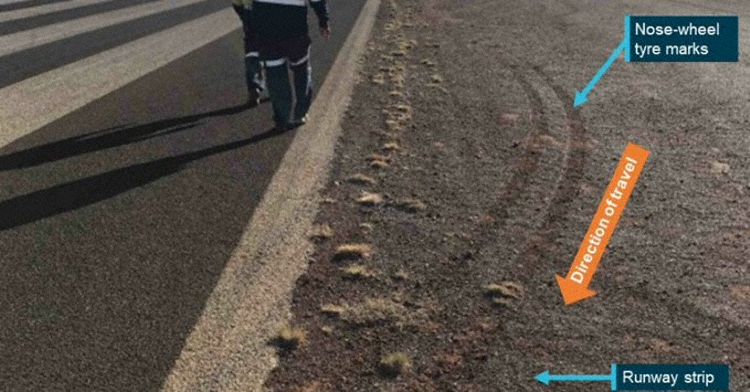
QQ-6526 from Perth,WA to Laverton,WA (Australia) with 75 passengers and 5 crew, had landed on Laverton's runway 25 with the first officer being pilot flying. After the aircraft had slowed to taxi speed the captain took control to taxi the aircraft to the end of the runway and turn around to backtrack the runway to the terminal. The captain positioned the aircraft to the left edge of the runway and initiated a right hand turn by rotating the nose wheel steering tiller, however, could not reach full deflection even with the force of both hands. The captain attempted to tighten the turn by applying right hand brakes and asymmetric thrust, however, could not prevent the nose wheel going beyond the edge of the runway and roll over soft ground (runway strip) briefly before the nose wheel returned onto the paved surface. The aircraft subsequently taxied to the terminal without further incident.
Australia's TSB released their final report into the incident concluding the probable causes were:
- A torn boot on a universal joint probably restricted the operation of the aircraft’s nose-wheel steering system, preventing the aircraft from completing the turn on the runway.
- The flight crew decided to continue the turn, resulting in the nose-wheel leaving the runway surface.
The ATSB analysed:
The maintenance findings and the captain’s statement indicate that it’s likely the torn boot reduced the universal joint’s range of motion, restricting the operation of the aircraft’s nose-wheel steering. This restriction reduced the aircraft’s turning ability, preventing it from completing the turn on the runway. It could not be determined how or why the boot was torn.
Although runway strips are designed to reduce the risk of damage, there is no assurance that aircraft can safely manoeuvre on them. While the excursion onto the runway strip in this event did not result in aircraft damage, there was no assurance that the strip was clear of hazardous debris. However, had the aircraft remained on the runway, other aircraft would not have been able to land there safely, including delivery of ground support equipment to manoeuvre the aircraft along the runway. Nevertheless, options such as having the airport staff inspect the runway strip before turning on it were available.
Related Flight:
QQ6526, Twitter:
#QQ6526,
Alliance Airlines News