Created Tuesday, Jan 4th 2022 08:45Z, last updated Friday, Aug 19th 2022 19:30Z
A British Airways Airbus A350-1000, registration G-XWBC performing flight
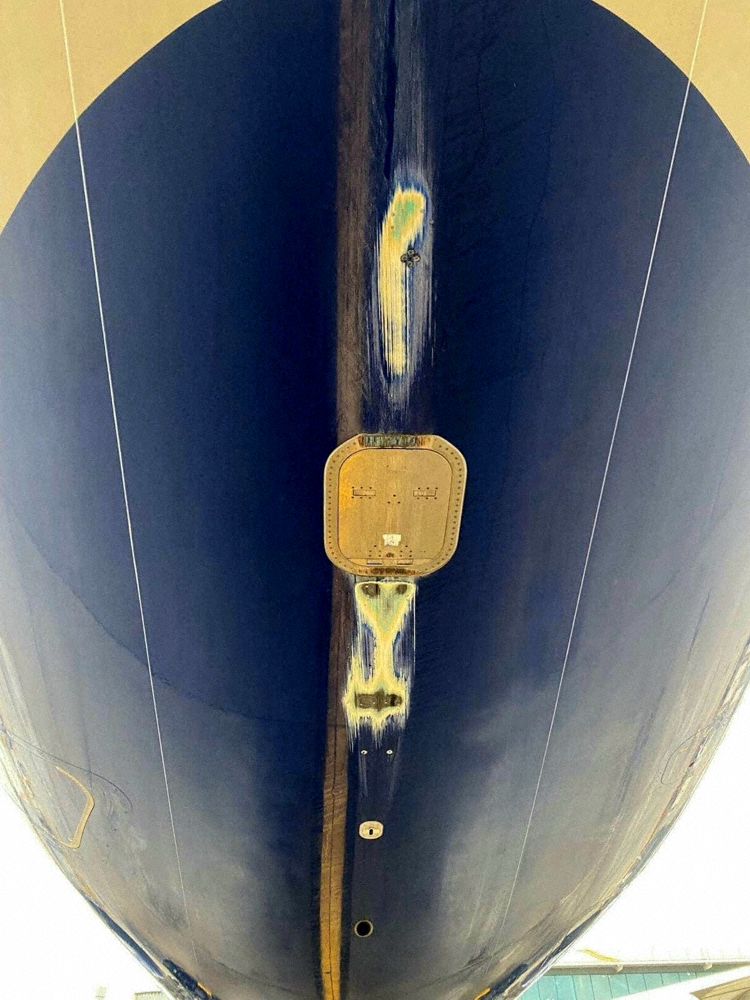
BA-104 from Dubai (United Arab Emirates) to London Heathrow,EN (UK), was on approach to Heathrow's runway 27L when the tail contacted the runway surface. The crew initiated a go around, climbed back to 4000 feet and positioned for another approach to runway 27R. The aircraft landed without further incident on 27R about 15 minutes after the first approach.
The aircraft is still on the ground in London about 42 hours after landing.
On Jan 13th 2022 the AAIB reported the aircraft suffered a tail strike during the go around. The damage was rated minor (minor paint and sensor damage), the occurrence was rated a serious incident and is being investigated.
On Aug 18th 2022 the AAIB released their final bulletin concluding the probable causes of the serious incident were:
A go-around was initiated from low height and low speed. The aircraft had insufficient energy to climb immediately and so touched down during the go-around process. The pitch rate induced by the co-pilot caused the aircraft to reach a nose up attitude sufficient to cause a tailstrike as the aircraft touched down.
The AAIB analysed:
Although the wind conditions at Heathrow were gusty, they were within limits for the approach. The approach was flown with the APs engaged until approximately 400 ft agl and then manually. The flare was initiated at 50 ft agl with the pitch attitude raised to 7° nose-up. This caused the rate of descent to reduce to 0 ft/min and so the aircraft floated along the runway. The thrust levers were retarded at 30 ft agl and the airspeed decreased with a concomitant reduction in lift. The aircraft then started to descend once more.
As the commander felt the aircraft would land beyond the TDZ, he directed a go-around in accordance with the operator’s policy. TOGA was selected on the thrust levers and, simultaneously, the co-pilot briefly applied full nose-up pitch control before partially reducing the command. This caused a pitch-up rate of approximately 3°/s. The aircraft touched down, and as the pitch attitude reached 9° nose-up the tail struck the ground.
The go-around was initiated before touchdown but as the engine thrust had been reduced to idle it took some seconds to develop go-around thrust. The airspeed had reduced significantly below approach speed and so the aircraft lacked the performance to gain height immediately and the touchdown resulted. This possibility is recognised in the FCTM which gives guidance for handling the aircraft in such circumstances.
From the point at which the go-around was initiated, 2,760 m of runway remained ahead of the aircraft, which would have been sufficient distance for the aircraft to land and safely decelerate. In these circumstances, it is unlikely that the control inputs that led to the significant pitch up would have been made and the aircraft might not have been damaged. However, landing would have been against the operator’s policy – common across all its fleets – to reject a landing if a touchdown beyond the defined TDZ is anticipated. The policy is applicable to a wide range of aircraft and airports, including many with restrictive runway lengths. The operator’s view was that a single policy ensures simplicity, avoids ambiguity, and includes a consideration that runway excursions represent a greater hazard than go-arounds.
Related Flight:
BA104, Twitter:
#BA104,
British Airways News