Created Thursday, Mar 23rd 2023 18:26Z, last updated Tuesday, Jul 16th 2024 18:25Z
A Delta Airlines Boeing 757-200, registration N540US performing flight
DL-1696 from Fort Lauderdale,FL to Atlanta,GA (USA) with 197 passengers and 6 crew, touched down on Atlanta's runway 09R at 21:20L (01:20Z Aug 7th) but became airborne again prompting the crew to perform a go around. The aircraft positioned for an approach to Atlanta's runway 10 and landed without further incident about 10 minutes after the go around.
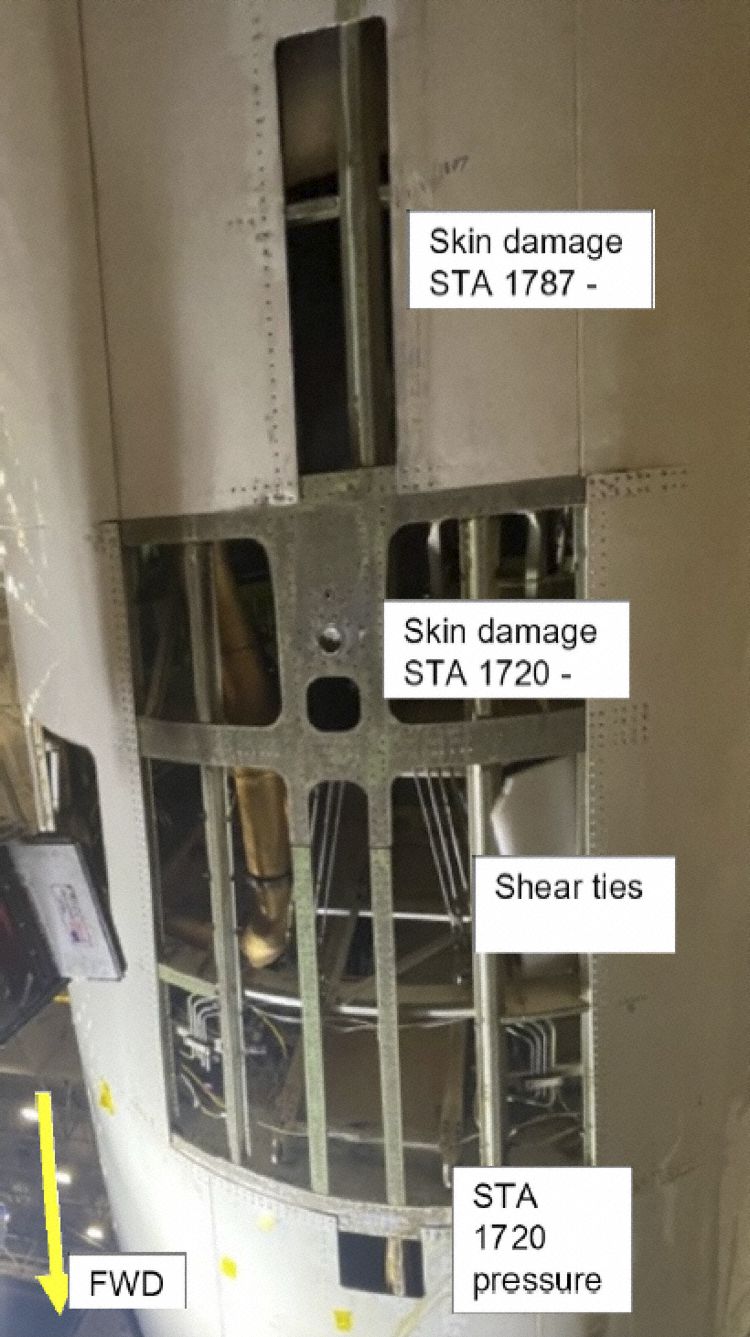
A post flight maintenance inspection revealed damage to the bottom of the aft fuselage.
The occurrence aircraft returned to service on Sep 1st 2022.
On Mar 23rd 2023 the NTSB made the occurrence known releasing their preliminary report, stating that the aircraft received substantial damage and summarizing the sequence of events:
The first officer was the pilot flying and the captain was the pilot monitoring. The flight was the first officer’s first operating experience (OE) flight and was his first attempt to land the airplane.
The flight had proceeded normally from takeoff through to the approach to land. Upon arrival, there were thunderstorms around the airport and the arrival route was changed from the SITTH2, arrival with a planned landing to the east, to the HOBTT2 arrival with a landing to the west.
As the flight proceeded FAA Air Traffic Control (ATC) directed the flight crew to hold at SMAWG intersection due to a microburst alert for the airport, and all arrivals were stopped. After holding for about 30 minutes, the arrival was changed to the GNDLF2, landing to the east. The crew received vectors for the Instrument Landing System (ILS) approach to runway 09R, and the airplane was configured and stabilized with landing flaps set at 25 degrees. Winds were reported as steady at less than 10 knots.
About 200 ft AGL the autopilot and auto throttles were disconnected. The airplane crossed the runway threshold about 100ft. AGL and landed near the end of the touchdown zone.
According to the captain, after main landing gear (MLG) touchdown the first officer “overrotated” and the airplane became airborne again. The captain then called a go-around due to the long landing and became the pilot flying. The flight subsequently landed otherwise uneventfully on runway 10.
The first officer said that on the approach the airplane became a little high and a little fast after he transitioned to visual references, about 100-150 ft. AGL. After touching down in the touchdown zone, he said the speed brakes deployed, and instead of gradually lowering the nose, he applied too much continuous aft pressure on the control yolk, which caused the airplane to become airborne again.
About 5 hours later, while on another flight in another airplane the flight crew was informed by maintenance of the tailstrike. There was damage to the skin from fuselage station (STA) 1700 to 1800, damage to two fittings and five shear ties, damage to the chord, and deformation of the pressure bulkhead at STA 1720.
On Jul 16th 2024 the NTSB released their final report concluding the probable cause of the accident was:
The overpitch control of the airplane during landing resulting in a tail strike.
The NTSB analysed:
Delta Air Lines flight 1696 sustained a tailstrike while landing at Hartsfield-Jackson Atlanta International Airport (ATL), Atlanta, GA. The flight was a regularly scheduled domestic passenger flight from Fort Lauderdale, FL (FLL) to ATL. The airplane sustained substantial damage, and there were no injuries to the 203 passengers and crew onboard.
According to the flight crew, the captain was the pilot monitoring, and the first officer (FO) was the pilot flying. The captain reported that he was providing operational experience to the FO and that it was the FO’s first time landing the Boeing 757-200 model airplane. The airplane was in the landing configuration with flaps at 25 and on a stabilized approach at 1000 ft above ground level (AGL) on final approach to Runway 10 in night visual condition. After touchdown, the speed brakes deployed, and the FO reported that he applied too much aft pressure on the yoke causing the plane to lift back off the ground and the captain executed a “go-around” procedure. At this time the captain assumed the pilot flying role, and the airplane landed uneventfully.
Both the captain and FO reported they had no indications of a tailstrike on the flight deck, they did not receive any passenger or flight attendant reports of any abnormalities and were unaware a tailstrike had occurred until the plane was inspected by maintenance later.
Related Flight:
DL1696, Twitter:
#DL1696,
Delta Air Lines News