Created Friday, Oct 28th 2022 19:23Z, last updated Tuesday, Jun 9th 2026 09:04Z
An Indigo Airbus A320-200, registration VT-IFM performing flight
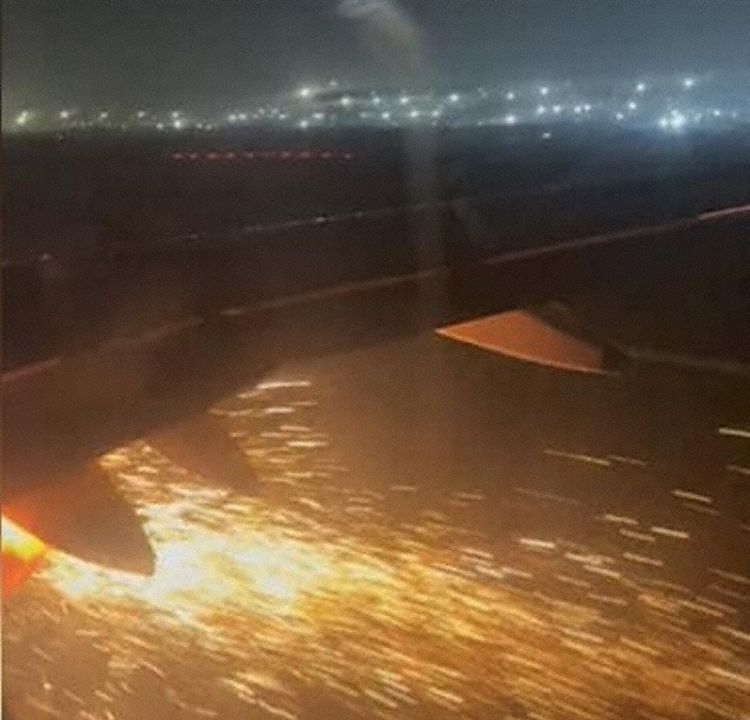
6E-2131 from Delhi to Bangalore (India) with 177 passengers and 7 crew, was accelerating for takeoff from Delhi's runway 28 when the crew rejected takeoff at low speed (about 45 knots over ground) due to the failure of the right hand engine (V2527) that emitted lots of sparks. The aircraft slowed safely, vacated the runway and taxied to the apron.
Delhi Police reported there were 184 people on board, who were not evacuated.
Passengers reported the crew announced some malfunction with the right hand engine.
A replacement Airbus A320-200N registration VT-IJW reached Bangalore with a delay of about 3 hours.
On Oct 29th 2022 India's DGCA reported preliminary investigation results show the right hand engine surged causing loud noise and streaks of flames and sparks in the engine exhaust. There were no injuries.
On May 24th 2023 India's AIB reported the #2 engine failed prompting the crew to reject takeoff, fire was seen from the engine and one fire bottle was discharged into the engine. In the post occurrence inspection outlet guide vanes and high pressure compressor blades were found severly damaged. The occurrence was rated a serious incident and is being investigated by India's AIB.
On Jun 9th 2026 India's AAIB released their final report concluding the probable causes of the serious incident were:
The probable cause of this serious incident is attributed to the HPC 3rd Stage heavy clapper wear that was found on the V2527-A5 engine (ESN V16666). The heavy clapper wear resulted in improper alignment between HPC 3rd stage blades and radial misalignment. Consequently, stresses increased at the root of HPC 3rd stage Blade no.1, eventually resulting in crack propagation and eventual HCF fracture of HPC 3rd stage Blade no.1.
The primary source of damage was the release of the fractured blade no.1 body, resulting in damage and secondary fractures to the rest of the HPC 3rd stage set as well as damage to the adjacent VIGVs and downstream hardware. This hardware damage causes a loss of HPC operability stability margin that ultimately leads to engine stall.
The contributory Factor(s)
The contributory factory to this Serious Incident was the design aspect related to the clapper coating of the HPC 3-stage blade i.e., the technique and type of material used for the clapper coating. The technique being utilized for clapper coating did not meet/withstand the durability results/expectation as desired while adopting that technique vide Service Bulletin SB 72-0487.
The AAIB analysed the circumstances leading to the serious incident:
On 28 October 2022, when the flight crew of the aircraft VT-IFM, commenced the take-off by pushing the throttle forward, both the engine spooled up normally as per the given command.
Engine no.1 kept working absolutely normal. Whereas inside the engine no. 02 (V2527-A5, ESN V16666), in its HPC 3rd Stage, Blade no. 1 (as labeled during the engine examination) fractured under High Cycle fatigue (Sequence of fatigue fracture: Heavy clapper wear of HPC 3rd Stage blades over a period of time resulted in improper alignment between blades and possible radial misalignment. These factors resulted in increased stresses at the blade root, eventually resulting in crack propagation and eventual fracture of Blade no. 1). Therefore, the primary source of damage to the subject engine was the release of the fractured blade no. 1 body, resulting in damage and secondary fractures to the rest of the HPC 3rd stage set as well as damage to the adjacent VIGVs and downstream hardware. This caused a probable VIGV surge at the HPC and flowed back to the LPC stage 2.5. This hardware damage causes a loss of HPC operability stability margin that ultimately leads to engine stall. This all happened within few seconds of commencement of take-off phase.
The flight crew followed the company’s FCOM emergency handling procedure and shut down the affected engine. Later, after safety checks the aircraft taxi back and parked to a bay safely on its own single engine (i.e., engine no. 1) at Delhi Airport.
Passenger photo:
Related Flight:
6E2131, Twitter:
#6E2131,
IndiGo Airlines News