Created Tuesday, Mar 9th 2021 21:53Z, last updated Tuesday, Mar 9th 2021 21:53Z
A Peruvian Airlines Boeing 737-300, registration OB-2037-P performing flight
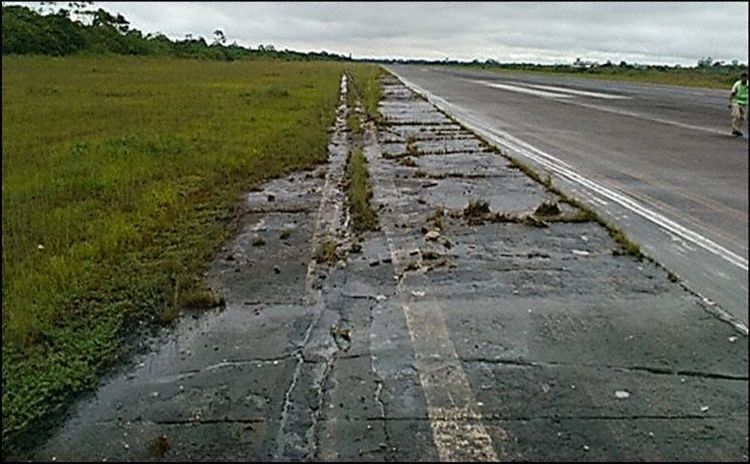
P9-122 from Lima to Iquitos (Peru) with 121 passengers and 7 crew, performed an ILS approach to Iquitos' runway 06. During the flare the aircraft drifted to the left, touched down left of the runway center line and continued left until exiting the runway about 500 meters past the runway threshold. The aircraft travelled about 450 meters parallel to the runway before returning onto the runway. The aircraft slowed without further incident and taxied to the apron where the passengers disembarked normally. There were no injuries, the aircraft sustained minor damage to landing gear, brakes and shock absorbers, mud in the engine inlets and bottom of the fuselage, damage to antennas, flap trailing edges and leading edges of the elevators.
On Mar 4th 2021 Peru's CIAA (Comision de Investigacion de Accidentes de Aviocion) released their final report in Spanish only (Editorial note: to serve the purpose of global prevention of the repeat of causes leading to an occurrence an additional timely release of all occurrence reports in the only world spanning aviation language English would be necessary, a Spanish only release does not achieve this purpose as set by ICAO annex 13 and just forces many aviators to waste much more time and effort each in trying to understand the circumstances leading to the occurrence. Aviators operating internationally are required to read/speak English besides their local language, investigators need to be able to read/write/speak English to communicate with their counterparts all around the globe).
The CIAA concluded the probable causes of the serious incident were:
Loss of situational awareness by the crew during landing. The crew did not notice that the aircraft became unstabilized during the flare, drifted to the left due to the weather conditions of strong wind, rain and reduced visibility causing a runway excursion.
Contributing factors were:
- The presence of a storm system over the aircraft significantly increased the operational workload by the crew. The effects of the crosswinds, turbulence and heavy rain affected the stability of the approach, a condition that should have prompted the crew to decide for a go around.
- The airport infrastructure is considered as a factor into the runway excursion because the main landing runway does not have a runway center line lighting system.
The captain (59, ATPL, 14,029 hours total, 1,672 hours on type) was assisted by the first officer (32, CPL, 4,301 hours total, 4,029 hours on type).
The aircraft had been dispatched under Minimum Equipment List requirements with the right hand thrust reverser disabled.
The CIAA reported that they did not have a cockpit voice recording due to the fact that the recording of the incident flight had been overwritten.
The CIAA analysed that the aircraft was instructed to maintain a high speed approach due to the incoming weather when the crew contacted Iquitos approach. ATC indicated crosswinds from the right and reducing visibility, just before the touchdown ATC reported 2km visibility.
These weather conditions did not prevent an ILS Cat 1 approach. The aircraft was configured with gear down, flaps 30, autopilot and autothrottle on, spoilers were armed. At 400 feet AGL the autopilot and autothrottle were disconnected. The aircraft was stabilized tracking localizer and glideslope within the permitted IAS of 141 KIAS (which was within Vref to Vref+20) until the flare. The rate of descent was 770 fpm with brief excursions to 300 fpm and 1000 fpm (at 860 feet AGL). The aircraft crossed the runway threshold at 50 feet AGL with wings level, the wind started to push the aircraft to the left. The aircraft touched down near the left edge of the runway, which was not detected by the crew in time to initiate a go around. The lack of runway center line lighting contributed to the crew losing track of the runway center line.
There is no evidence that any system failure or the de-activated thrust reverser contributed to the incident.
The pilot, after disconnecting autopilot and autothrust, used the crab technique to keep the aircraft on the extended runway center line. At 50 feet AGL the pilot began to decrab the aircraft however without compensating for the wind drift keeping the wings level, the aircraft thus touched down 22 meters left of the runway center line (22.5 meters available).