Created Thursday, Mar 11th 2021 19:42Z, last updated Thursday, Mar 11th 2021 20:06Z
A TUI Belgium Boeing 737-800, registration OO-JAY performing flight
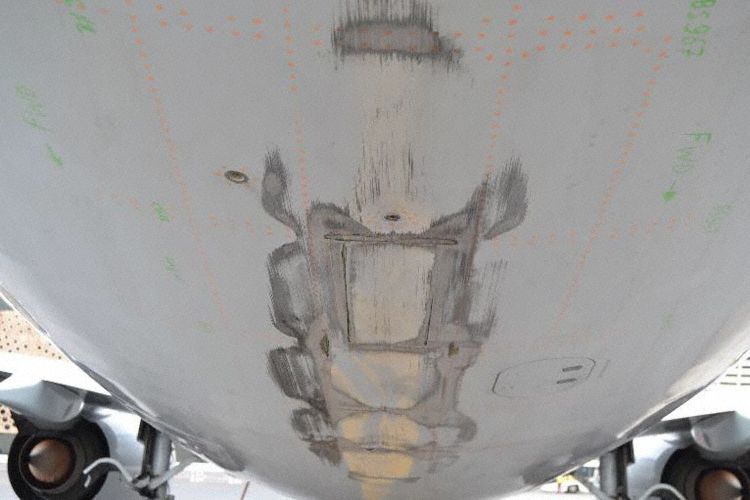
TB-3640 from Brest (France) to Marrakesh (Morocco), landed on Marrakesh's runway 10 at 12:18L (12:18Z) but struck its tail onto the runway surface on touchdown. The aircraft rolled out without further incident and taxied to the apron. There were no injuries, the aircraft sustained substantial structural damage however.
The aircraft was unable to depart for its return flight and was still on the ground in Marrakesh 20 days later.
Some time in the past Maroc's BEA released their final report in French only (editorial notes: discovered only on Mar 11th 2021 after a re-design of their website; to serve the purpose of global prevention of the repeat of causes leading to an occurrence an additional timely release of all occurrence reports in the only world spanning aviation language English would be necessary, a French only release does not achieve this purpose as set by ICAO annex 13 and just forces many aviators to waste much more time and effort each in trying to understand the circumstances leading to the occurrence. Aviators operating internationally are required to read/speak English besides their local language, investigators need to be able to read/write/speak English to communicate with their counterparts all around the globe).)
The report concludes the probably causes of the accident were:
- inappropriate execution of the landing procedures by the flight crew
- excessive correction by the first officer to reqacquire the landing trajectory
- late reaction by the captain to rectify the situation
- inadequate decision by the captain to continue landing
Contributing factors were:
- Lack of experience by the first officer
- Unfamiliar terrain for the first officer
- Lack of experience by the Type Rating Instructor (TRI) training pilot
The BEA reported the first officer under training (25, ATPL, 650 hours total, 500 hours on type) was pilot flying, the captain (29, ATPL, 6,000 hours total, 4,000 hours on type) qualified as TRI was pilot monitoring supervising the first officer.
The crew performed a visual approach to runway 10 in favourable weather conditions. About 25nm before the runway threshold the flight directors were disengaged, the approach was flown manually on raw data. Based on the FDR data the aircraft became too low when descending through 200 feet AGL, the first officer corrected, the aircraft now became too high with high engine thrust, at 100 feet AGL the thrust was reduced to near idle, a high rate of descent developed. Without taking control of the aircraft the captain increased thrust to reduce the rate of descent, however, the aircraft touched down hard and bounced. The captain now took control of the aircraft but continued the landing, the tail skid as well as the aft fuselage of the aircraft struck the runway surface (tail strike).
The BEA analysed that although the approach was performed manually and the flight directors were off, the ILS was tuned on both receivers.
Following the correction by the first officer after being too low on the approach, becoming too high on the approach and the reduction of thrust to near idle the captain had to decide whether to go around or take control to arrest the rate of descent. As the approach was no longer stabilized the decision to continue the landing was inappropriate. However, the action to increase thrust should have been accompanied by another action to arrest the sink rate and restore the desired trajectory. As result the aircraft touched down hard, the speedbrake automatically deployed upon first contact, the aircraft bounced. At that point the captain took control and continued landing reducing thrust, however, underestimated the height of the aircraft and initiated the new round out too early. As result the pitch angle became too high, the aircraft's tail contacted the runway surface resulting in structural damage to the aircraft.