Created Monday, Apr 19th 2021 10:53Z, last updated Monday, Apr 19th 2021 10:53Z
A British Airways Boeing 787-9, registration G-ZBKF performing flight
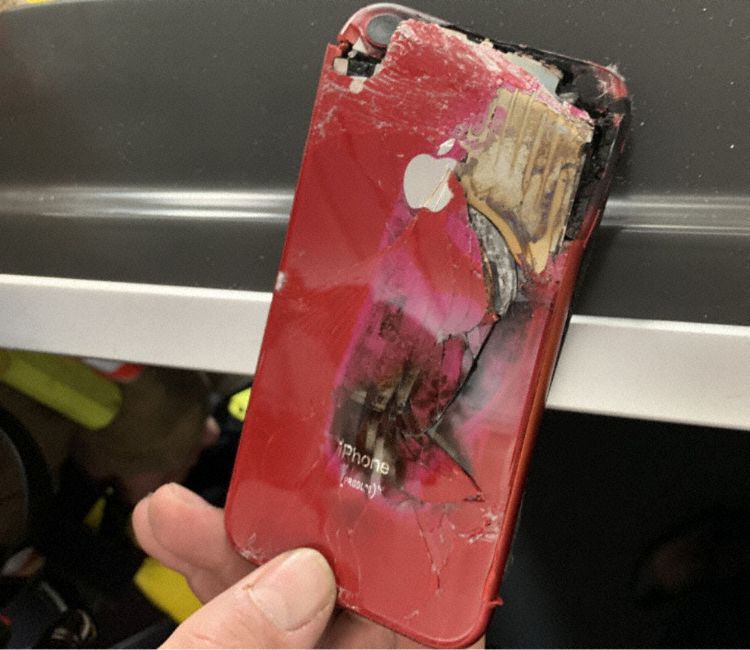
BA-206 (dep Sep 30th) from Miami,FL (USA) to London Heathrow,EN (UK) with 53 passengers and 10 crew, was enroute at FL410 and nearing the top of descent when cabin crew noticed smoke rose from one of the passenger seats and while investigating discovered a mobile phone had fallen into the seat mechanism and had been crushed. The crew quickly extinguished the fire using a BCF fire extinguisher but could not retrieve the jammed device which was no longer emitting any significant heat, the aircraft continued to London for a safe landing.
On Apr 19th 2021 the UK AAIB released their bulletin without a formal conclusion.
The AAIB described the sequence of events:
Approximately 40 minutes before landing the flight crew made an announcement that woke a passenger. The passenger moved her seat from the flat-bed position to a more upright position then left her seat to use the washroom. One of the cabin crew asked the passenger if she could stow the bedding whilst the passenger was away from her seat. As she removed the bedding, she smelt a strong odour and noticed a charging cable which was plugged in to the seat socket with the other end down the side of the seat. The smell, which she described as “sulphur”, was getting stronger so she attracted the attention of the Senior Cabin Crew Member (SCCM). At this point they heard a “hissing” sound and a large plume of grey smoke emitted from the seat in a “tornado” motion. They remembered seeing an orange glow in the seat area amongst the smoke.
The crew member retrieved a BCF fire extinguisher and fire gloves for the SCCM and asked a third crew member to switch the seat power off. The SCCM pulled back the seat padding exposing a device trapped in the seat mechanism. She discharged several bursts of BCF into the device. The crew member then collected a water extinguisher and filled an ice bucket with water. The third crew member contacted the flight crew.
Shortly before receiving the call from the cabin crew the flight crew smelt an acrid odour on the flight deck. The cabin crew informed the commander that thick smoke was emanating from a seat in the forward cabin and that they had initiated their firefighting drill. The flight crew started the smoke, fire or fumes checklist and evaluated their diversion options. The third pilot went back to the cabin to assist.
After the SCCM had discharged the BCF, the smoke quickly dissipated and the crew were able to clearly see a red mobile phone trapped in the seat mechanism. The crew attempted to remove the device but it was jammed. There was very little heat coming from the device. They checked for secondary heat sources but did not find any. The cabin crew updated the commander.
As the source of the smoke had been identified and extinguished and the aircraft was now only 20 minutes from landing at Heathrow the commander decided to continue to Heathrow. He made a PAN call to alert ATC and ensure the fire service met the aircraft on landing. He also made an alert call to the cabin crew and gave a NITS briefing. He then made a further announcement to the passengers. One cabin crew member remained in the vicinity of the seat with an extinguisher to hand for the remainder of the flight. The aircraft landed normally at Heathrow.
After landing the fire service boarded the aircraft and removed the device from the seat. There was no damage to the aircraft.
The AAIB analysed:
A passenger’s mobile phone became trapped in the seat mechanism and was crushed when the seat was adjusted. This damaged the battery, generating flames, smoke and fumes. The cabin crew were able to extinguish the fire using their existing procedures.
The operator makes announcements to passengers on all flights with electrically powered seats to try to prevent PEDs becoming lost in seats, as recommended by the EASA. They have also tried to design the seats to limit the chance of PEDs being crushed in the mechanism. However, these events continue to occur. The CAA has received 166 reports of PEDs lost in passenger seats in the last five years. A quarter of these events resulted in fire or smoke in the cabin, demonstrating that this is a significant hazard to the safety of the aircraft.
There are currently no CAA or EASA requirements to design seats to prevent damage to PEDs which become accidentally trapped, despite this being a known issue. The SAE international seat committee is taking safety action to develop design standards and/or recommended practices to address the issue. The AAIB makes the following Safety Recommendation to ensure these design standards and/or recommended practices are developed and adopted:
Safety Recommendation 2021-017:
It is recommended that the Civil Aviation Authority require that passenger seats in commercial air transport aircraft are designed to minimise the chance of portable electronic devices becoming crushed in mechanisms.
Related Flight:
BA206, Twitter:
#BA206,
British Airways News